Who Is Jeff Steele?
Static on the Mountain
By the time Jeff Steele turned fifty-three, he had already lived three different lives.
The first was the glory years — overnight radio in Minneapolis, spinning vinyl records and talking too fast into a microphone at two in the morning while lonely truckers and bartenders called in requesting Zeppelin songs. Back then he believed radio mattered. He believed a voice in the dark could save somebody from feeling alone.
The second life was messier.
Two divorces. A third marriage hanging together with equal parts stubbornness and exhaustion. Too many nights ending in bourbon. Too many mornings waking up unsure what he’d said the night before. Stations changed formats. Corporate owners bought frequencies and automated personalities out of existence. Jeff drifted from classic rock to sports talk to local advertising reads for furniture warehouses and car dealerships. Somewhere along the line, he stopped listening to music and started surviving.
The third life began in Alaska.
It wasn’t some grand reinvention. Nobody moved to Talkeetna to reinvent themselves. People moved there because they were tired, broke, hiding, healing, or all four.
Jeff and his third wife, Denise, arrived in late September with two irritated cats, a borrowed trailer, and a cabin purchased cheap from old friends who were relocating to Arizona after one particularly brutal winter. The cabin sat outside Talkeetna among spruce trees and birch, with a crooked porch and a wood stove that groaned like an old blues singer whenever the wind picked up.
The first week, Jeff kept waiting for the silence to bother him. Instead, it settled into him like medicine. No traffic. No sirens. No late-night bar noise leaking through apartment walls. Just ravens, distant train whistles from Alaska Railroad freight and passenger trains slowly moving through the town, and the soft crack of cold trees at night.
Denise found work quickly at a local gift shop that sold handmade soaps, carved moose figurines, and coffee strong enough to raise the dead. Jeff worked remotely for Northland Radio, an internet-only station run out of Delta Junction by a former military guy with a tech background who still believed independent radio had a future, beyond the government regulation of "terrestrial" stations.
The pay wasn’t much, but Jeff didn’t care.
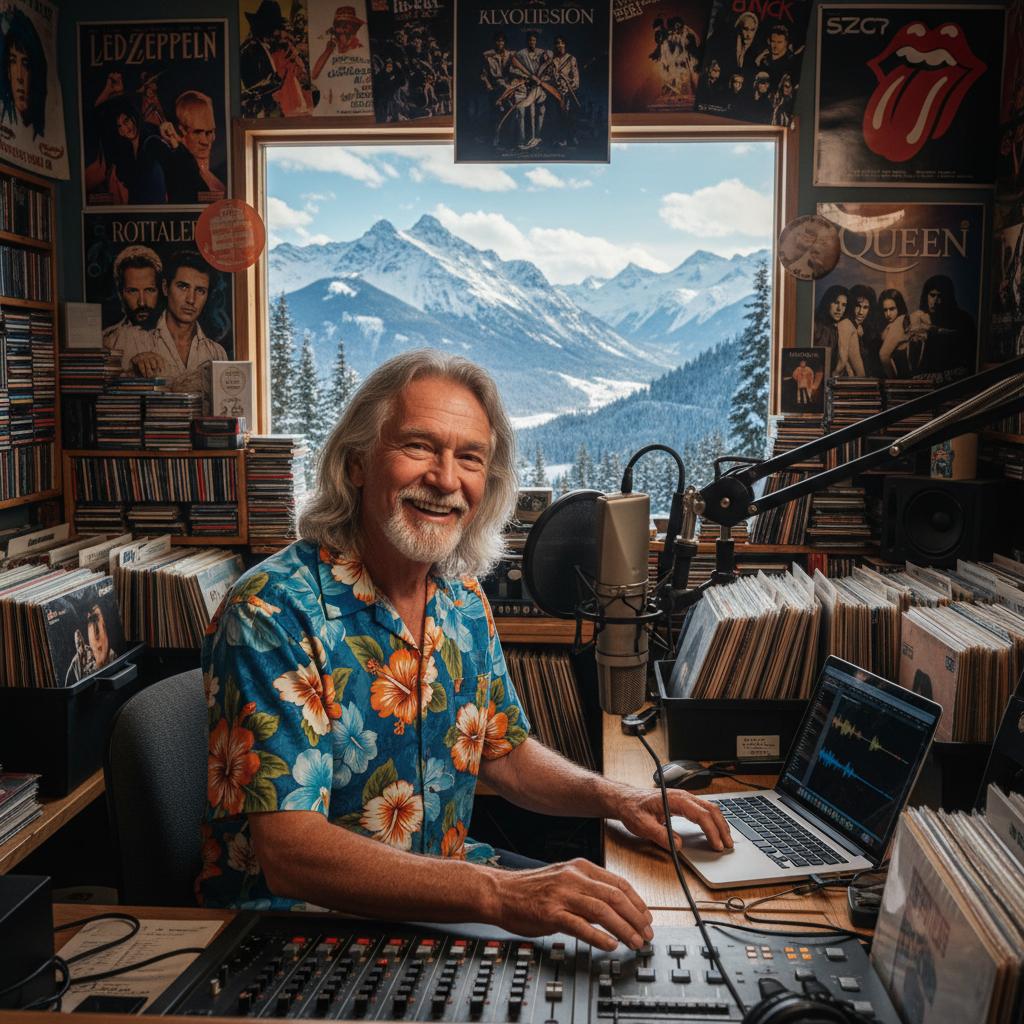
Every morning he stepped into the tiny back room in the cabin they called “the studio,” though it was really just a desk with soundproof foam glued unevenly to the walls. He’d fire up the microphone, adjust his headphones, and record voice-overs and station IDs. “Northland Radio — the rock authority for Alaska.” Then commercials for some obscure outdoor supply carrying winter gear good for sixty below…”. Then afternoon voice breaks between songs. “Coming up next, some Tom Petty for your Tuesday. If you’re driving out the ALCAN today, keep it between the lines and keep the music loud.” His voice still had it. Warmth. Gravel. Experience. The kind of voice that sounded trustworthy even when the man behind it wasn’t entirely sure he trusted himself.
Some afternoons he’d sit alone after recording sessions and simply listen to old records while snow gathered outside the windows. Pink Floyd. Guns N' Roses. Fleetwood Mac. The music returned first. Then pieces of himself followed.
Sobriety was still work. There were nights the cold crawled into his bones and he’d think about whiskey with dangerous clarity. Nights when old regrets lined up in his head like callers waiting on hold. His second wife crying in a kitchen. Missed birthdays. Angry voicemails. The shame of waking up on a motel floor in Des Moines fifteen years earlier after getting fired from a station he’d loved.
But Alaska had a way of stripping people down to essentials. Cut wood. Get water. Feed the fire. Show up tomorrow. Denise understood this better than he did. She’d quit trying to “fix” him years ago. Now they lived carefully together, like two people rebuilding an old cabin one board at a time. The cats adapted faster than either of them. Oliver became obsessed with watching snowshoe hares through the window while June stationed herself permanently beside the wood stove like a tiny queen guarding her throne. One December evening, Northland Radio lost internet connectivity during a storm in the Interior. Dead air across the station. Jeff got the call from the owner. “You still got your old equipment?” Jeff looked around the cabin. He did. Within twenty minutes he rigged together an emergency local stream via his trusty Starlink using backup software, an aging microphone arm, and cables he’d carried across four states and two failed marriages because he could never bring himself to throw them away.
Then he talked. Not polished radio talk. Real talk. He spoke about winter storms. About surviving dark seasons. About hearing certain songs at the exact right moment in life. He played Creedence Clearwater Revival, Bowie, and The Eagles while snow hammered the roof overhead. Messages flooded the station chat. Truck drivers listening outside Fairbanks. Night nurses in Wasilla. A widower in Soldotna who said the station sounded “human again.” Jeff sat back from the microphone and stared at the blinking studio lights.
Human again.
He hadn’t realized how long he’d felt otherwise. Later that night, Denise found him sitting on the porch wearing an old denim jacket despite the cold. “You okay?” she asked. Jeff nodded toward the dark treeline. “You know what’s strange?” “What?” “For the first time in years,” he said quietly, “I don’t feel like I’m running anymore.” The northern lights appeared faintly above the trees, green ribbons moving silently across the sky. Inside the cabin, the cats slept near the fire while an old Tom Petty song continued playing softly through the studio speakers. And somewhere out there in the long Alaskan dark, people were still listening.